How Artificial Hedges Are Made: Materials, Manufacturing, and Quality
A behind-the-scenes look at how premium artificial hedge panels are manufactured. Learn about the materials, construction techniques, and quality standards that separate premium from budget options.
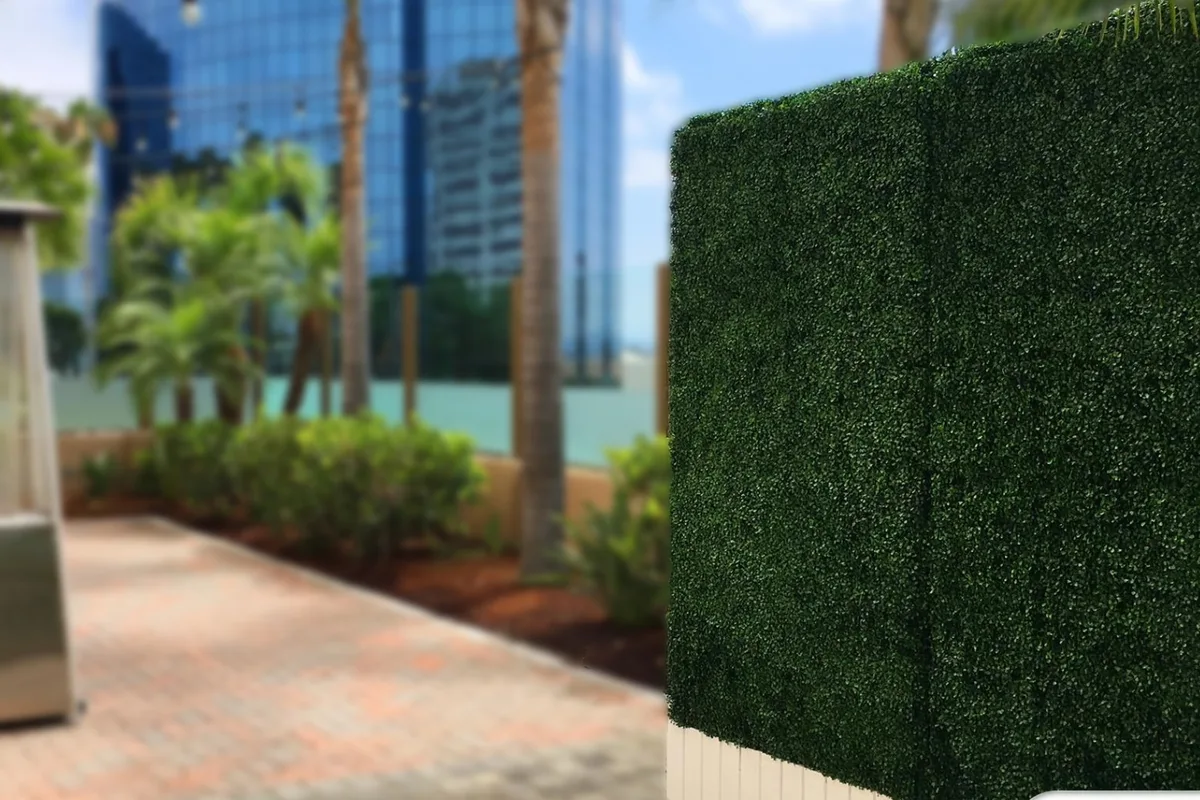
What Goes Into Making an Artificial Hedge Panel?
When you see a beautiful hedge wall at an event, you are seeing the end result of a sophisticated manufacturing process. Understanding how artificial hedges are made helps you appreciate the difference between premium products and cheap alternatives -- and why that difference matters for your event.
What Materials Are Artificial Hedge Panels Made From?
Foliage Materials
Premium artificial hedge leaves are made from two primary plastics:
Polyethylene (PE) is used for the highest-quality leaves. PE leaves have a natural, matte texture that closely mimics real plant material. They are soft to the touch, flexible, and maintain their shape over years of use. PE is more expensive to produce but delivers the most realistic result.
Polypropylene (PP) is used for structural elements and some leaf varieties. PP is stiffer and more durable than PE, making it ideal for stems and branches. Some budget panels use PP for all foliage, which results in a harder, more plastic-looking appearance.
The best panels use a blend: PE for visible leaves and PP for internal structure.
UV Stabilizers
All quality outdoor artificial foliage includes UV stabilizers mixed into the plastic during manufacturing. These additives prevent the material from breaking down under ultraviolet light, which causes fading, brittleness, and discoloration over time.
Budget products often skip UV stabilization to cut costs. You can identify unstabilized foliage by its tendency to fade to yellow-green within a few months of sun exposure.
Fire Retardants
For indoor commercial use, venues may ask for fire documentation before approving decorative materials. Documentation available for applicable configurations. Requirements vary by venue and local review, so ask your rental provider what documentation is available for the exact product being quoted.
How Are Artificial Hedge Panels Manufactured?
Leaf Production
Individual leaves are injection molded from PE or PP pellets. Each leaf mold captures vein patterns, edge serrations, and subtle surface texture that contribute to a realistic appearance.
Premium manufacturers use multi-cavity molds that produce leaves in several slightly different shapes and sizes. This variation is crucial -- in nature, no two leaves are identical, and the subtle differences create a more convincing visual.
Color Application
Leaf color is achieved through one of two methods:
Through-coloring adds pigment directly to the plastic pellets before molding. The color goes all the way through the leaf, so scratches or edge wear does not reveal a different color underneath. This is the premium approach.
Surface coating applies color to the molded leaf surface after production. This is cheaper but less durable -- the color can chip, fade, or peel over time.
The most realistic panels use through-colored leaves with additional surface treatments to add color variation. Real boxwood leaves are not a single shade of green: they have lighter new growth, darker mature leaves, and subtle yellow or brown tones. Premium artificial foliage replicates this variation with multi-step coloring processes.
Assembly
Leaves and stems are assembled onto a backing grid or mat. In premium products, individual leaf clusters are hand-attached at varying depths, creating the three-dimensional density that makes the panel look real. Budget products use flat mats of foliage glued to a backing board, which results in a thinner, less realistic appearance.
Frame Construction
The backing mats are mounted onto rigid frames made from powder-coated steel or aluminum. Premium frames include:
- Interlocking connectors that pull adjacent panels tightly together
- Adjustable legs or base plates for freestanding installation
- Mounting channels for signage, lighting, and accessories
- Drainage holes for outdoor use (prevents water pooling behind panels)
What Are the Different Quality Tiers?
Premium (Event Rental Grade)
- PE foliage with multi-tonal coloring
- UV stabilized for outdoor use
- Documentation available for applicable configurations
- Steel or aluminum frames with professional hardware
- Expected lifespan: 5-8 years with proper care
Mid-Range
- PP/PE blend foliage with basic coloring
- Some UV protection
- Plastic or thin metal frames
- Expected lifespan: 2-4 years
Budget
- PP foliage with single-tone coloring
- Minimal or no UV protection
- PVC or plastic frames
- Expected lifespan: 1-2 years
What This Means for Your Event
Understanding manufacturing quality helps you ask the right questions when choosing a rental company:
- What material are your panels? PE foliage is the gold standard
- Are they UV stabilized? Essential for any outdoor use
- How old is your inventory? Even premium panels degrade eventually -- well-maintained inventory should be replaced every 5-6 years
- Can I see the panels before my event? Reputable companies welcome preview visits
The difference between a premium hedge wall and a budget alternative is immediately visible in person and in photographs. For an event where appearance matters, quality is worth the investment.
Questions about our hedge wall quality and materials? Get in touch.
Related Articles
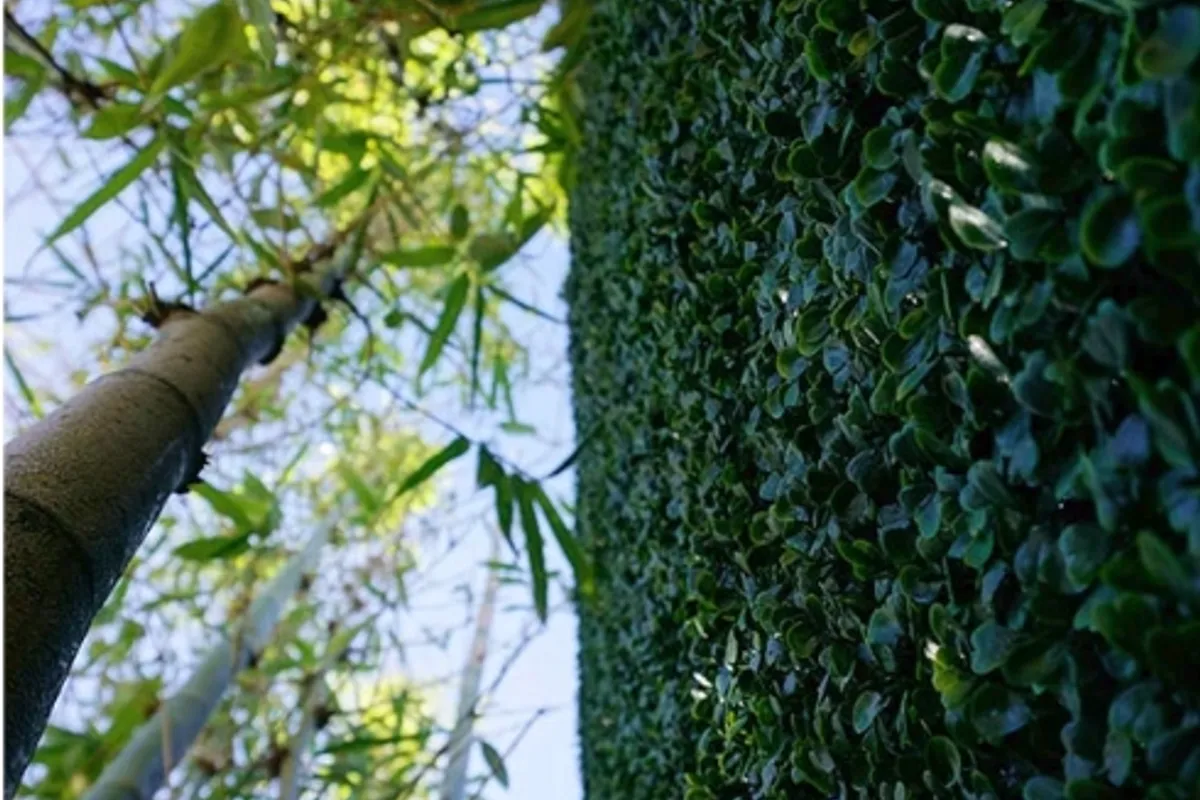
Boxwood Hedge Walls Explained: Types, Styles, and What to Expect
A deep dive into boxwood hedge wall varieties. Learn about different foliage styles, panel construction, and how to tell premium quality from cheap alternatives.
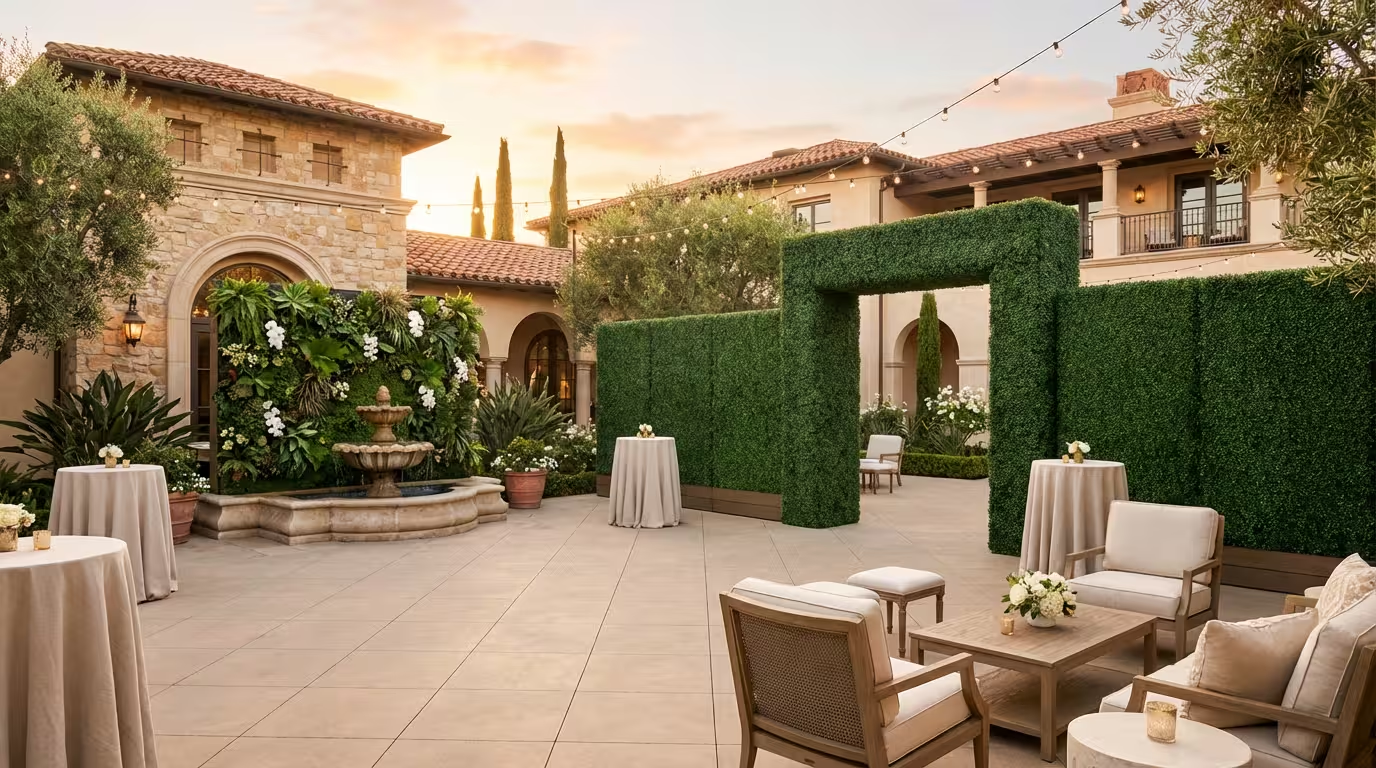
Orange County Hedge Wall Planning Guide: Resorts, Estates, and Ballrooms
A planning guide for Orange County hedge wall event builds, covering resort and country-club density, hotel ballroom protection rules, coastal setups, and the wedding-plus-corporate mix from Newport to Irvine. For direct rental availability, start with our Orange County service-area page.
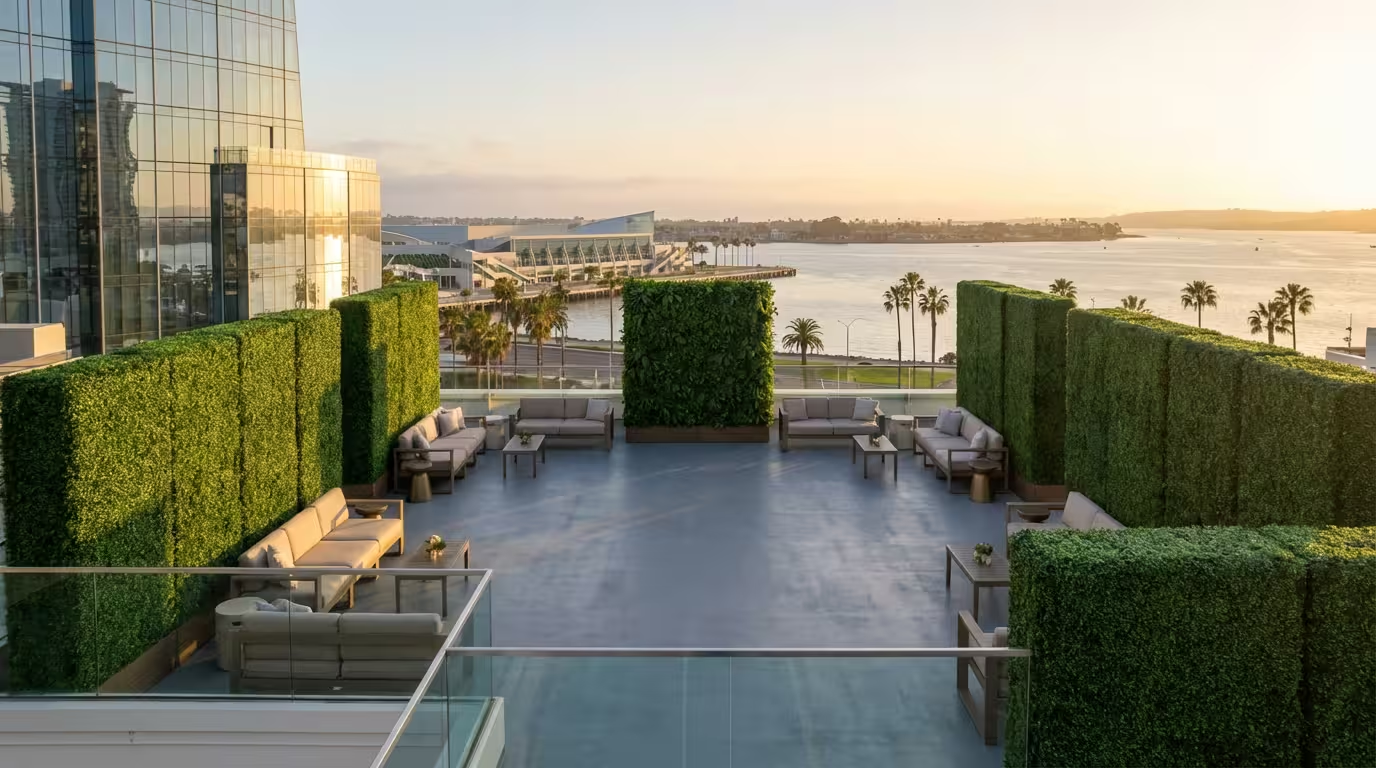
San Diego Hedge Wall Planning Guide: Coastal Venues, Access, and Sizing
A planning guide for San Diego hedge wall event builds, covering the year-round outdoor season, coastal wind and salt-air scoping, Convention Center dock and COI logistics, and sizing patterns. For direct rental availability, start with our San Diego service-area page.
Related Products
Boxwood Hedge Walls
Artificial boxwood hedge wall rentals for privacy runs, branded backdrops, and modular event footprints.
View ProductHedge Arches
Freestanding boxwood arches from 8 to 12 ft tall — round, square, or custom — that connect straight into a hedge wall run.
View ProductHedge Letters & Logos
Spell it out in green. Your brand, literally living.
View ProductReady to Build Your Vision?
Tell us about your event and we'll design a custom configuration that fits your space and brand.