Using Artificial Hedge Walls at Outdoor Events: Heat, Wind, and Rain
How to plan outdoor hedge wall event setups that withstand Southern California heat, desert winds, and unexpected weather. Practical tips from years of outdoor event experience.
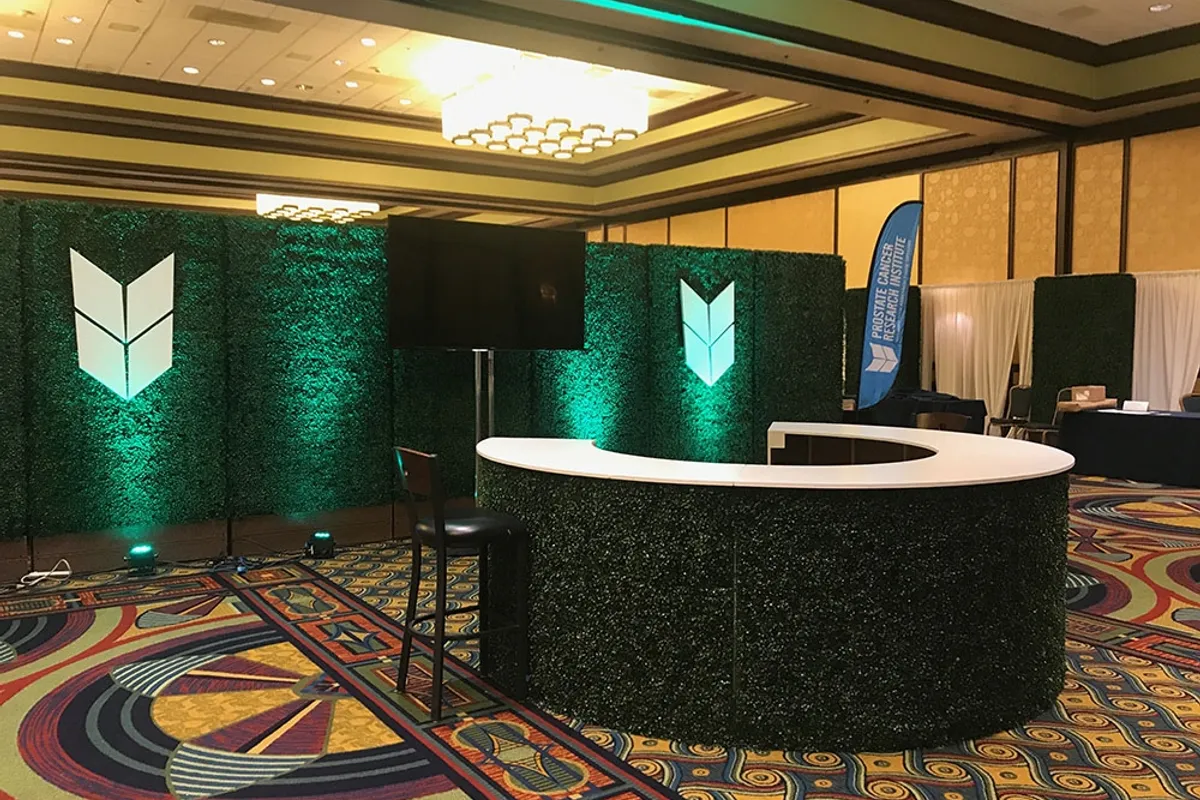
Why Do Outdoor Events Need Specialized Decor?
Outdoor events are magical. The open sky, natural light, and fresh air create an atmosphere that no indoor venue can replicate. But outdoor events also come with environmental challenges that indoor planners never think about: intense heat, unpredictable wind, and the occasional surprise rain shower.
Artificial hedge walls are designed to handle all of these conditions, but proper planning makes the difference between a flawless installation and one that causes stress on event day.
How Do Hedge Walls Handle Extreme Heat?
If you are hosting events in Southern California, Arizona, Nevada, or Texas -- our primary service areas -- extreme heat is a given for much of the year. Here is how premium hedge walls handle it:
UV stability. Quality artificial foliage is treated with UV stabilizers that prevent fading and discoloration. Our panels maintain their vibrant green color even after extended exposure to direct sunlight. Cheap alternatives will fade to a yellowish tone within a single season.
Material integrity. Premium synthetic leaves are made from PE (polyethylene) and PP (polypropylene) blends that are designed for high outdoor temperatures. In Southwest event conditions, quality panels generally maintain their shape and color better than low-cost alternatives.
No watering required. This seems obvious, but it is worth stating: while live plant installations struggle in extreme heat and require irrigation, artificial hedge walls do not require watering during the event.
How Do You Secure Hedge Walls in Wind?
Wind is the primary challenge for outdoor hedge wall event setups. Here is how to plan for it:
Anchoring Systems
Every outdoor hedge wall installation should use a weighted base system. Our standard outdoor setup includes:
- Weighted base plates -- Steel plates weighted to resist winds up to 25 mph
- Cross-bracing -- Horizontal bars that connect the bases for additional lateral stability
- Sandbag concealment -- Additional sandbags placed behind the wall and concealed from view for extra security
Wind Speed Guidelines
- 0-15 mph -- Standard installation, no additional precautions needed
- 15-25 mph -- Additional anchoring recommended; inform your rental company about expected conditions
- 25+ mph -- Consider relocating the wall to a sheltered position or moving indoor
Strategic Placement
Position hedge walls against existing structures when possible -- building walls, fences, or solid tent sidewalls provide wind protection. If the wall must be freestanding, orient it parallel to the prevailing wind direction rather than perpendicular to minimize the sail effect.
Can Hedge Walls Be Used in Rain?
Artificial hedge walls are completely waterproof, but rain creates other considerations:
Ground conditions. Wet grass or mud can make base plates unstable. If rain is expected, request base plates with wider footprints or ground-penetrating stakes (where permitted by the venue).
Guest comfort. Even if the wall is fine in rain, your guests are not. Plan for a tent or canopy near the hedge wall to keep the photo area dry.
Post-rain appearance. After rain, hedge walls may have water droplets on the foliage. This actually looks great in photos -- the dewy appearance adds realism. A quick shake removes excess water if preferred.
What Are the Best Seasons for Outdoor Hedge Wall Events?
Summer (June-September)
Schedule setup for early morning to avoid the hottest part of the day. Ensure your setup crew has shade, water, and appropriate break schedules. Consider the sun position during your event -- east-facing walls get morning sun and afternoon shade, which is ideal for evening events.
Fall (October-November)
Watch for Santa Ana winds in Southern California and dust storms in desert areas. Check weather forecasts 48 hours before your event and have a communication plan with your rental company if conditions change.
Winter (December-February)
Rain is the primary concern. Have a tent backup plan and confirm that your venue allows staking if needed for wet-ground stability.
Spring (March-May)
Typically favorable weather for many outdoor events in our service areas, with moderate temperatures and manageable wind in many markets.
Checklist for Outdoor Hedge Wall Events
Before your outdoor event, confirm:
- Venue allows anchored installations on their grounds
- Rental company provides outdoor-rated base systems
- Weather forecast checked 48 hours before the event
- Setup crew has a contact number for the rental company
- Backup plan exists for severe weather
Need help planning an outdoor event? Contact us with your venue details and we will recommend the right setup.
Related Articles
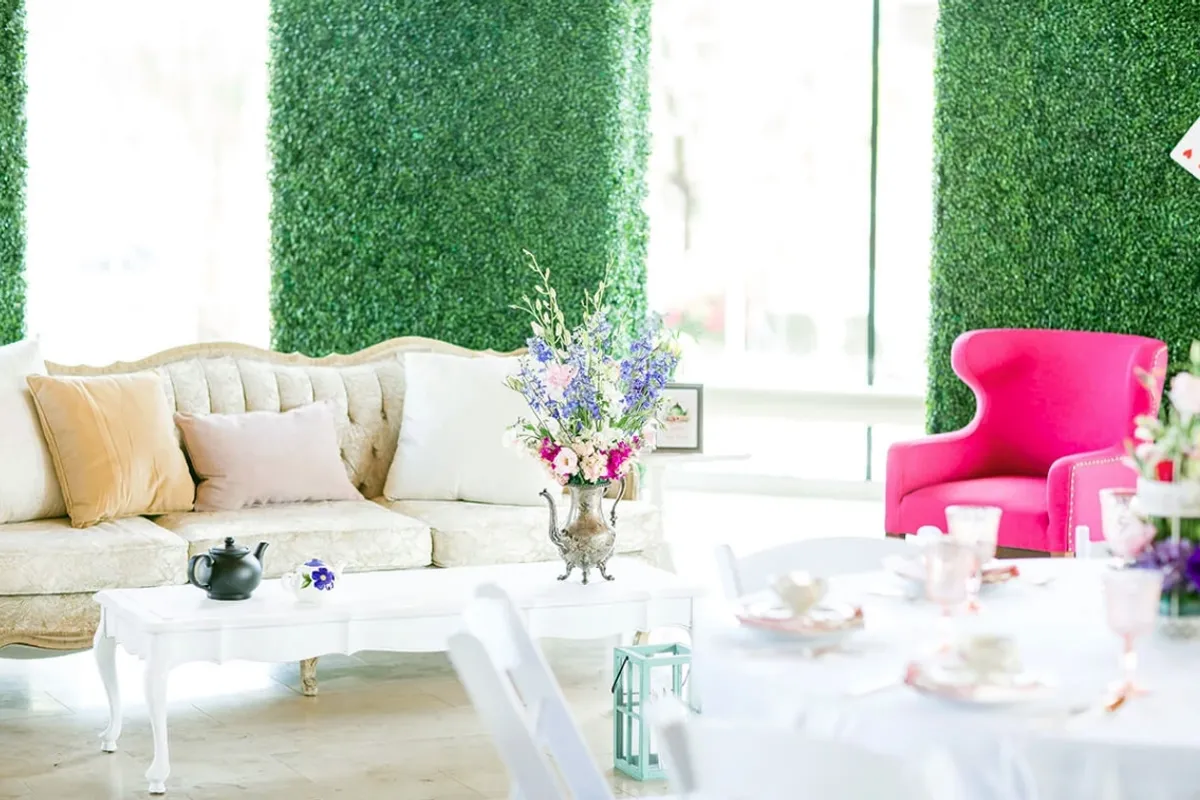
How to Choose the Right Size Hedge Wall for Your Event
A practical sizing guide for hedge wall rentals. Learn how to measure your space, calculate the right wall dimensions, and avoid the most common sizing mistakes event planners make.
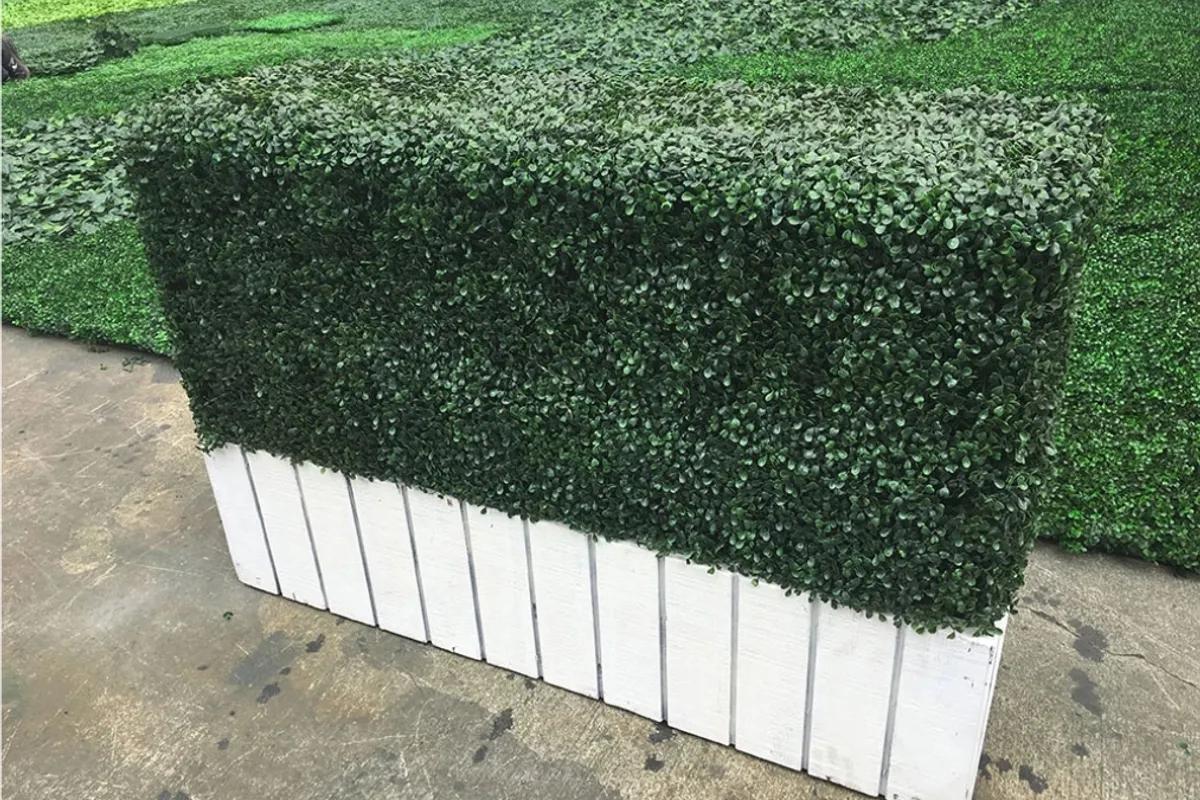
5 Mistakes to Avoid When Renting Hedge Walls
Common mistakes event planners make when booking hedge wall rentals -- and how to avoid them. Save time, money, and stress by getting it right the first time.
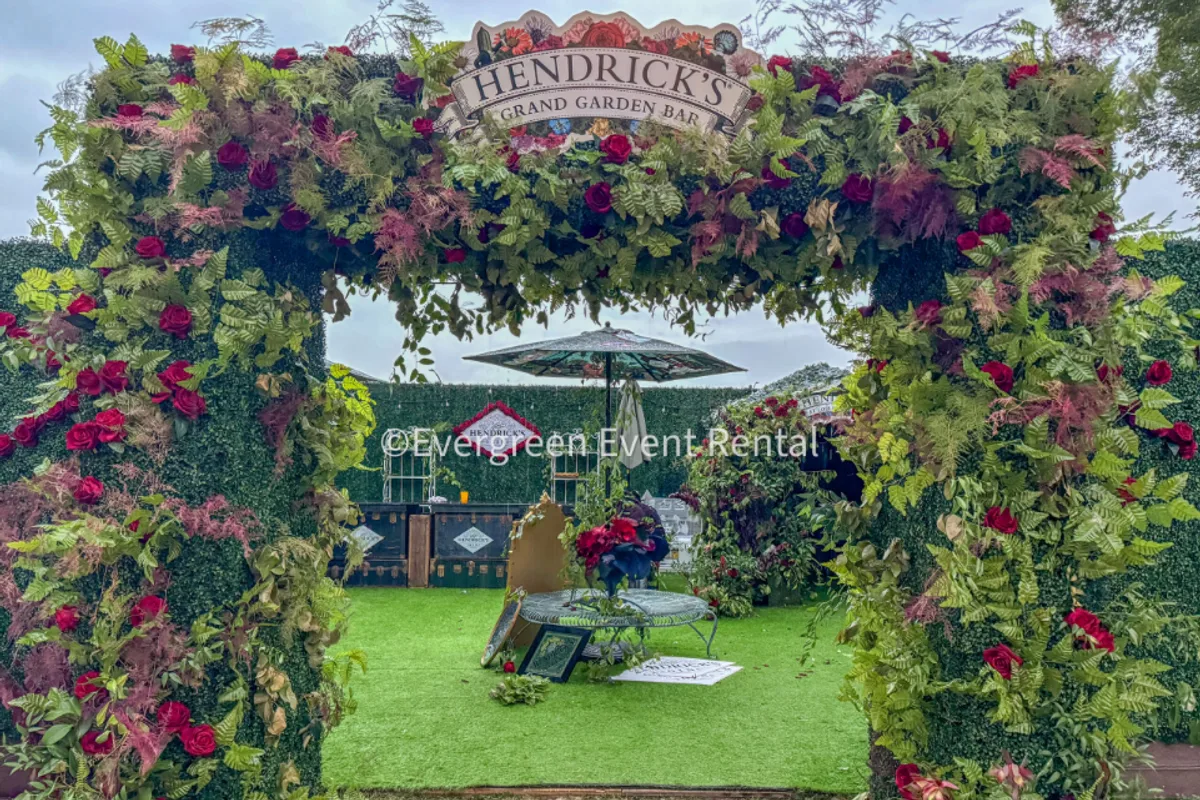
Event Rental Trends Shaping 2026
From mixed-material installations to immersive brand environments, here are the event rental trends shaping 2026 event design decisions.
Related Products
Boxwood Hedge Walls
Artificial boxwood hedge wall rentals for privacy runs, branded backdrops, and modular event footprints.
View ProductHedge Arches
Freestanding boxwood arches from 8 to 12 ft tall — round, square, or custom — that connect straight into a hedge wall run.
View ProductHedge Letters & Logos
Spell it out in green. Your brand, literally living.
View ProductReady to Build Your Vision?
Tell us about your event and we'll design a custom configuration that fits your space and brand.